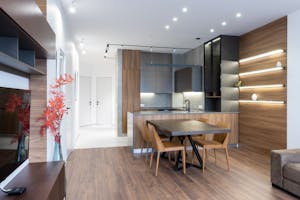

The Modern Homeowners Manifesto: Embracing the High-Performance Lifestyle
Discover the 2026 Modern Homeowner’s Manifesto. Learn why high-performance modular homes are the new gold standard for family health, energy independence, and long-term equity.
Owning a home in 2026 is no longer about “square footage” alone; it’s about performance, intelligence, and resilience. This manifesto explores how the shift to modular living is providing families with healthier, more affordable, and technologically superior homes that are built to last for generations.
The New Standard of Living
In 2026, the definition of a “dream home” has fundamentally changed. The sprawling, inefficient “McMansions” of the early 2000s have been replaced by a desire for High-Performance Living. Today’s homeowners are looking for spaces that don’t just house them, but actively work for them.
The Future Ready Home is characterized by three core pillars: Precision, Performance, and Peace of Mind. Because these homes are born in a factory, every joint is tighter, every seal is more robust, and every material is chosen for its longevity. For the 2026 family, this translates to a home that is quieter, cleaner, and significantly cheaper to operate.
Precision Engineering for Everyday Comfort
The primary difference a homeowner notices in a modular build is the “Quiet.” Because modular units are built as independent structural boxes and then joined together, there is a natural double-layer of sound insulation between rooms. In an era of remote work and multi-generational living, this acoustic privacy is a luxury that traditional site-built homes struggle to match.
Furthermore, the precision of industrial manufacturing means no “settling” cracks in the drywall, no drafty windows, and no “mystery squeaks” in the floorboards. The home feels solid because it is solid—engineered to survive the rigors of highway transit before it even arrives at the foundation.
Financial Resilience in a Volatile World
In 2026, a “Future Ready” home is also a financial fortress. With energy costs rising globally, the Net-Zero Ready nature of modern modular homes provides a massive hedge against inflation. Homeowners are seeing energy bills that are 60-80% lower than their neighbors in traditional homes.
Moreover, as the Build Canada Homes Act continues to influence the market, modular homes are retaining their value at higher rates. Banks and insurers now recognize the “Digital Twin” data (discussed in our Developer series) as proof of quality, often leading to lower mortgage rates and reduced insurance premiums for certified high-performance builds.
Conclusion: A Legacy for the Future
Choosing a modular home in 2026 is an act of stewardship. It is a decision to prioritize the health of the family and the health of the planet without sacrificing modern design. As we move further into the decade, the “Future Ready” homeowner is the one who chooses precision over tradition and performance over pretense.