
The 2026 Sustainability Mandate: Why Embodied Carbon is the New ROI Metric in green Finance
As of January 2026, “Net Zero Operations” is no longer the highest standard in Canadian housing. While energy-efficient windows and heat pumps are important, the Treasury Board and CMHC have shifted their focus to Embodied Carbon—the total CO2 emitted during the manufacturing, transport, and assembly of building materials before the key is ever turned in the lock.
The Regulatory Pressure Under the Greening Government Strategy, all major federally-funded projects must now disclose their material carbon intensity. This is no longer a “feel-good” metric; it is a financial one. For developers seeking MLI Select or BCH financing, a lower carbon score now translates directly into lower interest rates and higher loan-to-value ratios. Green is quite literally the color of money.
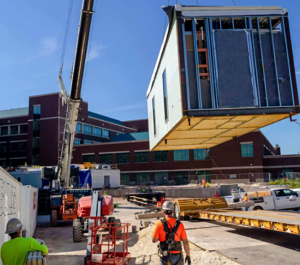
The Modular Advantage Modular construction is the surprise winner of this 2026 mandate for three reasons:
- Waste Reduction: In a factory, material off-cuts are recycled or repurposed, reducing site waste by up to 90%. Every ton of waste saved is a ton of carbon removed from the project’s total.
- Material Efficiency: 2026 modular designs favor Cross-Laminated Timber (CLT) and light-gauge steel, which have significantly lower carbon footprints than traditional poured-in-place concrete.
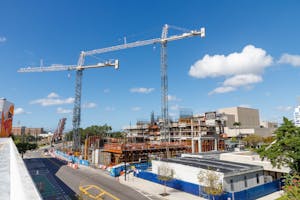
- Logistical Precision: The “Just-in-Time” delivery model reduces the “Idling Time” of heavy machinery on-site. By minimizing the time a crane sits running on a city street, modular builders are significantly cutting their site-based emissions.
Financial Reality In 2026, your carbon report is as important as your proforma. If your building isn’t “Green by Design” from the factory floor, it may become an “un-financeable” asset by 2030. High-performance modular isn’t just a building choice; it’s an investment hedge.