50 Reasons Why
50 Reasons Why?
Modulars are the answer! – Ready to get started? – Contact us
Building communities using modular units is one of the most efficient ways to address modern infrastructure needs. These standardized “building blocks” provide a versatile foundation that can be transformed into high-end, functional spaces for almost any sector.
50 REASONS WHY MODULAR UNITS ARE THE FUTURE OF COMMUNITY BUILDING AND LIVING
Rapid Deployment: Units can be on-site and ready for use in a fraction of the time of traditional builds.
Easy Assembly: Pre-engineered parts mean the “heavy lifting” is done before the units arrive.
Simultaneous Site Work: While foundations are being poured, the units are being finished in a factory, cutting project timelines by up to 50%.
Immediate Occupancy: Once connected to utilities, these spaces are often ready for move-in within days.
Weather Independence: Since units are built indoors, rain or snow never delays the construction schedule.
Diminished Costs: Mass production in a controlled environment significantly lowers the price per square foot.
Reduced Engineering Costs: Standardized blueprints mean you don’t have to pay for a custom architectural design from scratch every time.
Predictable Budgeting: Fixed costs for modular units eliminate the “hidden surprises” common in traditional construction.
Lower Labor Expenses: Fewer specialized trades are needed on-site, reducing high travel and lodging costs for workers in remote areas.
Scalable Investment: You can start with a few units and add more as your business or community grows.
Homes: Create instant housing developments that are sturdy and modern.
Clinics: Quickly establish medical outposts in rural or underserved areas.
Hospitals: Expand existing medical facilities with specialized surgical or recovery wings.
Schools: Solve classroom overcrowding issues in weeks rather than years.
Military Use: Deploy robust barracks, command centers, and mess halls in tactical environments.
Shops & Retail: Launch “pop-up” malls or permanent storefronts with minimal overhead.
Rec Centres: Build gymnasiums and community hubs for youth and fitness.
Business Offices: Create professional corporate headquarters or remote job-site offices.
Laboratories: Controlled factory builds are perfect for high-tech, sterile research environments.
Warehousing: Modular units can be stacked or joined for secure storage solutions.
Disaster Relief: Provide immediate shelter for displaced families following fires or floods.
Emergency Management: Deploy mobile command units to coordinate rescue efforts in real-time.
Pandemic Response: Quickly build isolation wards or vaccination centers during health crises.
Fire Resilience: Modular units can be built with high-grade fire-resistant materials.
Flood Elevation: These units are easily installed on raised pier foundations to stay above flood zones.
Uniform Look: Creates a clean, cohesive, and professional aesthetic across an entire community.
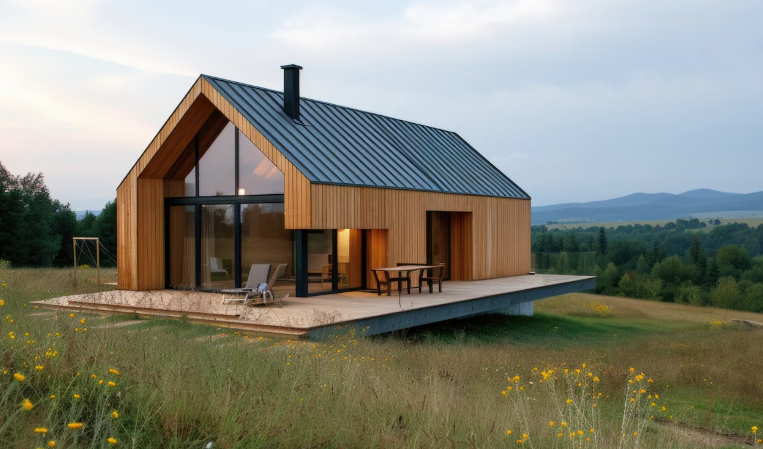
Retrofit Capability: These units are “blank canvases” that can be wrapped in cedar, metal panels, or stone.
Modern Finishes: Interior upgrades like LVP flooring and LED lighting make them feel like luxury builds.
Stackability: Units can be stacked to create multi-story buildings, saving on the land footprint.
Flexible Layouts: Walls can often be removed or joined to create large open-concept spaces.
Reduced Material Waste: Factory precision means almost zero leftover scrap compared to a messy job site.
Low Site Disturbance: Minimal heavy machinery on-site protects the local ecosystem and landscape.
Reusable Foundations: If a building is no longer needed, it can be removed, leaving the land in its original state.
Energy Efficiency: Modern insulation and airtight seals lower heating and cooling costs.
Recyclability: Units can be disassembled and repurposed for new uses rather than being demolished.
Global Transportability: Units are designed to fit on standard trucks and ships for easy transport.
Rugged Construction: Built to withstand the vibrations of highway travel, making them more durable than many site-built homes.
Seismic Safety: Their rigid structure often performs better in earthquake-prone zones.
Easy Relocation: If a business or community needs to move, the entire building can go with them.
Interchangeability: Damaged sections can be swapped out easily without compromising the whole structure.
Acoustic Privacy: Since each module has its own walls/floor/ceiling, sound transfer between rooms is significantly reduced.
Standardized Maintenance: Repairing a fleet of uniform buildings is simpler and cheaper for facilities managers.
Accessibility: Units can be manufactured with built-in ramps and ADA-compliant features.
Quick Utility Hookup: Pre-plumbed and pre-wired sections snap together like a puzzle.
Air Quality: Factory construction prevents moisture from being trapped in the walls (no mold during build).
Community Branding: Units can be painted or branded to give a neighborhood a unique identity.
Worker Safety: Building in a controlled factory environment is much safer for construction crews.
Security: Steel-framed units provide a high level of security against theft and vandalism.
Hybrid Capabilities: Modular units can be combined with traditional “stick-built” structures for a custom look.
Future-Proofing: As technology changes, units can be individualy upgraded or retrofitted without tearing down the entire complex.
Ready To Get Started?
Let the Taiga team manage your project so you can plan your life